11
11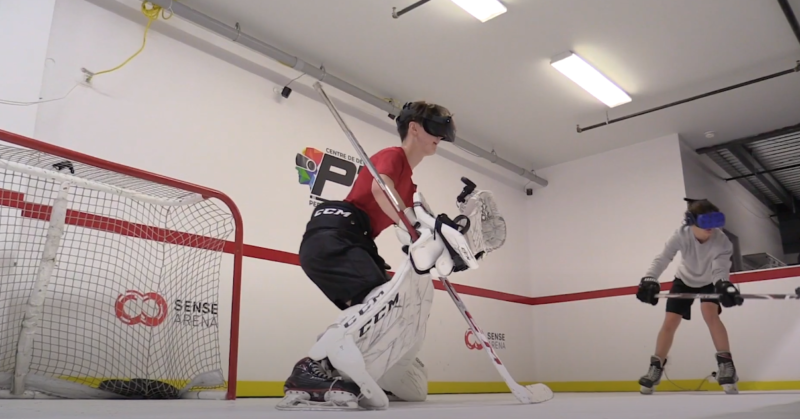
I still remember the first time I heard someone casually mention hockey vr training. It wasn’t in some high-tech lab or a pro locker room—it was during a regular conversation at a local rink, the kind where people are half-watching practice and half-talking about gear, injuries, or the last game.
At first, I brushed it off. Hockey, at its core, is raw and physical. You feel the ice under your blades, the impact of a check, the split-second chaos unfolding around you. So the idea of putting on a headset and “training” felt… disconnected.
But then I started paying closer attention. Not just to what people were saying, but to how players were actually improving. And, well, it turns out there’s a lot more going on here than meets the eye.
If you’ve spent any real time around hockey players, you’ll know this already—practice isn’t always as productive as we like to believe.
Sure, there are drills. Plenty of them. Passing sequences, shooting reps, skating patterns. But how often do those drills truly replicate game pressure? Not often.
In a real match, everything happens fast. Decisions aren’t clean or predictable. You’re reacting to movement, reading players, adjusting on instinct. And those moments—the ones that actually define performance—are surprisingly hard to recreate in traditional training.
You might run a drill ten times, but only one or two reps feel remotely “real.”
That gap? That’s exactly where hockey vr training starts to make sense.
Here’s the thing that surprised me most: VR training isn’t about replacing ice time. Not even close.
It’s more like… adding another layer to it.
With hockey vr training, players can simulate in-game scenarios repeatedly, without the usual constraints. No waiting for your turn in line. No resetting the drill. No relying on other players to recreate the right situation.
You want to practice reading a defensive setup? You can.
Work on your reaction as a goalie facing breakaways? That’s there too.
And the best part? You can repeat the exact same situation until it clicks—or tweak it slightly and challenge yourself in new ways.
It’s controlled, but it doesn’t feel artificial. That’s a fine line, and somehow, this tech manages to walk it.
We don’t talk enough about the mental side of hockey.
Everyone focuses on speed, strength, endurance—all important, obviously. But decision-making? Awareness? Anticipation? Those are the skills that separate good players from great ones.
And they’re hard to train.
That’s where hockey vr training really stands out. It forces players to think quickly, to process visual information under pressure, to make choices without hesitation.
You’re not just going through motions—you’re actively engaged. Reacting. Adjusting. Learning.
One coach I spoke to described it in a way that stuck with me: “It’s like giving players extra game time, without the wear and tear.”
That’s a pretty big deal when you think about it.
On the ice, repetition has limits. Your legs get heavy. Your focus drifts. Eventually, the quality of practice drops, even if you’re still technically “training.”
But with hockey vr training, that dynamic shifts.
You can run through dozens of high-pressure scenarios without exhausting your body. It’s a different kind of fatigue—more mental than physical—but it doesn’t break you down in the same way.
For younger players, that’s huge. For professionals juggling tight schedules, it’s even bigger.
It’s like squeezing extra value out of every training day without pushing yourself to the brink.
This part doesn’t get enough attention, but it probably should.
Confidence in hockey often comes from familiarity. When you’ve seen a situation before, you handle it better. You don’t freeze. You don’t second-guess.
With hockey vr training, players are exposed to those situations again and again. Different angles, different speeds, different outcomes—but the core experience stays consistent.
And over time, something shifts.
Players start recognizing patterns. They trust their instincts more. They hesitate less.
It’s subtle, but it shows up in real games. A quicker pass. A smarter positioning choice. A calmer response under pressure.
It’s not magic—it’s repetition meeting awareness.
I used to think this kind of technology was reserved for elite athletes. The kind with access to cutting-edge facilities and big budgets.
But that’s changing. Fast.
More training centers are incorporating hockey vr training into their programs. Youth academies are experimenting with it. Even individual players are finding ways to access it outside of team environments.
And honestly, it makes sense.
If you can improve your game sense without needing a full team, a rink booking, and a structured session—why wouldn’t you?
It levels the playing field in a way traditional training never quite could.
Of course, it’s not perfect.
You’re not going to feel the ice under your skates or the physical impact of a defender. You won’t develop your skating power or your physical endurance through VR alone.
And for some players, it takes time to adjust. The first few sessions can feel awkward, even a bit disorienting.
But that’s true for any new training method.
Remember when video analysis first became popular? Or when wearable trackers started measuring every movement? Those felt strange at first too.
Now, they’re just part of the routine.
If you zoom out a little, you start to see a bigger picture forming.
Training is evolving. It’s becoming more precise, more personalized, more focused on efficiency. Less about just “putting in hours” and more about what you actually get out of those hours.
And hockey vr training fits right into that shift.
It’s not loud or flashy. It’s not trying to reinvent the sport. It’s just quietly improving how players prepare for it.
And sometimes, that’s exactly what makes something stick.
I’ll admit, I was skeptical at first. There’s something deeply traditional about hockey that makes you question anything too “modern.”
But after seeing how players are using hockey vr training—how it sharpens their thinking, builds confidence, and fills gaps that ice time alone can’t cover—it’s hard not to respect it.
At the end of the day, hockey isn’t just about physical skill. It’s about perception. Timing. Decision-making in moments that don’t give you time to think.
And if there’s a tool that helps players handle those moments better… well, it’s worth paying attention to.
Even if it starts with a headset on the sidelines.